Donate
  • Home
  • Bright Ideas Blog
logotype
  • Home
  • Bright Ideas Blog
logotype
  • Home
  • Bright Ideas Blog
Fitness & Active Living
Home Archive by Category "Fitness & Active Living"

Category: Fitness & Active Living

06 Apr
Fitness & Active LivingHealthy LivingHobbies & InterestsLifestyleBy Tyra Daniel0 Comments

5 ways to explore the Greater Toronto Area on a budget

How well do you know the area you call home? Wouldn’t it be fun to be a tourist in your own city? Visiting quirky neighbourhoods and neat stores, tasting food from around the globe, taking in exciting attractions and exploring the great outdoors. Would it surprise you to find out that there’s so much that’s available in the Greater Toronto Area (GTA), either free or on a reasonable budget? 

Here are five ways to start exploring and be a tourist in your own backyard! 


1. Museums and attractions


The GTA is home to world-class attractions like the Royal Ontario Museum (ROM) and Ripley’s Aquarium of Canada (both offer discounts for older Canadians and complimentary visits are available). It’s also full of other, less well-known surprises like the Aga Khan Museum and the Textile Museum of Canada. 

Did you know Ontario’s heritage treasures are open with free events every April to October? Doors Open Ontario has a number of locations opening their doors for you to explore. Visit the Doors Open Ontario website for a complete list of events.  

While there is an entrance fee to visit Casa Loma in Toronto, a guided tour at Spadina Museum right beside Casa Loma is always free. There are a number of free museum and cultural events in Toronto to explore. 

The Toronto Public Library offers the Museum + Art’s Pass (MAP) program. With a Toronto Public Library card, you can borrow the pass and get into many Toronto museums and attractions free. Mississauga offers a PAMA Family pass that lets families (bring the grandkids!) get into art galleries and museums free. Check out if your public library offers the same — most libraries offer this type of pass! 

Hot Docs is celebrating 30 years this year and begins April 27 in Toronto. Patrons 60+ can take advantage of free tickets to watch an amazing selection of documentaries from around the world before 5 pm daily.  

You may want to take advantage of Attractions Ontario Coupons for discounts to attractions all over Ontario, and if you use PRESTO on the GO system, you can get more price breaks. 


2. Markets and festivals


You’ll never run out of markets, festivals and fairs to visit in the GTA and surrounding area. To taste international cuisine at great prices, the St. Lawrence Market and its Market Gallery (always free) is a natural destination. That’s just the beginning, because farms such as the Brooks Farm in Mount Albert have seasonal festivals and events worth a visit.  

A number of farms in the GTA offer a fun day of exploring and strawberry picking. Most charge a small entry fee which includes the cost of the strawberries. To Do Canada offers a good list of farms to get you started.    

Why not take in a free movie or concert at various parks, including the Regent Park Film Festival, Toronto’s longest-running, free community film festival. Visit To Do Canada for an updated list of festivals near you. Don’t forget the Toronto International Festival of Authors, where browsing is free, and you can meet the authors. 


3. The great outdoors


The GTA has about 12 million trees covering beautiful trails, neighbourhoods, and attractions to visit and explore. A great place to start is ROMWalks, free guided tours of Toronto that include historical facts, and no registration is required. The Tour Guys offer inexpensive walking tours of various exciting Toronto spots. Along the way you can stop at some of the unique food trucks the city has to offer. Or you may want to check out a food truck festival. Canadian Food Truck Festivals lists upcoming festivals near you.  

You may decide to take an always-free stroll through the GTA’s many parks and gardens. Apart from popular destinations like Edwards Gardens or Toronto’s largest public park, High Park, consider visiting the fully accessible Rosetta McClain Gardens in Scarborough and the Humber Bay Butterfly Habitat along the shores of Lake Ontario in the west end.  


4. Natural wonders


Further afield, there’s an abundance of natural wonders and beautiful towns to experience. One of the most charming is Elora, and its most famous attraction, the Elora Gorge. It’s made up of 350 acres of riverside trails, scenic overlooks and some of the best trout fishing in North America. Another stunning area is the Cheltenham Badlands, one of the few places you’ll see rolling red soft rock, devoid of vegetation. The Elora Gorge and Cheltenham Badlands open for the season in May.  

Toronto Field Naturalists is a volunteer-run, non-profit nature conservation group that offers over 140 guided nature walks and you can participate in various conservation efforts. The Toronto Ornithological Club has regular field trips and funds bird-related projects in the GTA. Check out Senior Toronto for more nature groups like these. 


5. Lesser known


The GTA also has some unique attractions in its nooks and crannies you might not know. The Thomas Fisher Rare Book Library, part of University of Toronto, holds around 700,000 fascinating rare books and manuscripts, including a publication from 1551. A mainstay of the Toronto skyline is the Redpath Sugar Refinery, where you can tour the active factory and visit the museum.  


There’s so much to see and do in the GTA — and so much of it is right in our own backyard. We hope you can get out and explore some of these amazing places and find some new ones too.  
READ MORE
05 Oct
Fitness & Active LivingHealthLifestyleBy Tyra Daniel0 Comments

5 budget-friendly ways to stay fit and active

Exercise benefits people of all ages. For older adults, keeping fit and limber becomes even more important to stay healthy in body and mind. Regular exercise can be varied, fun and achieved on a small budget.

When choosing budget-conscious exercises, the following tips can spice up your activity:

  • find what you enjoy and switch if you get bored
  • invite friends and family
  • plan ahead to stay motivated

Here are some handy tips for staying active while being mindful of the effects on your bank account.

1. Walking

For many, walking is accessible, only requiring comfortable shoes and clothing. You could keep a brisk pace to increase your heart rate and choose a route where you can add stairs, hills, and nature paths. Ontario has lots of free, scenic trails including the popular Bruce Trail and Toronto’s Leslie Street Spit Trail. Walking is a great opportunity to listen to music or an audiobook.

2. Yoga

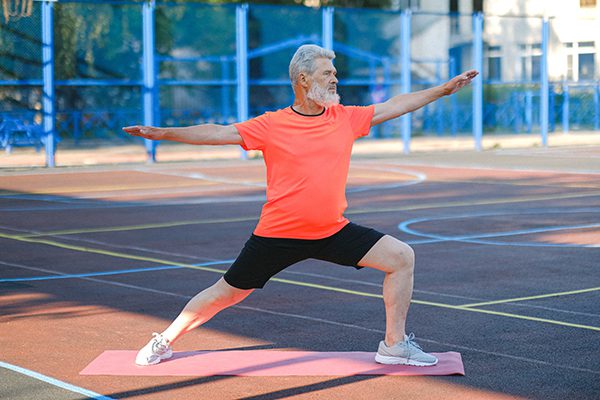
Yoga offers gentle, low-impact activity with huge benefits for muscle strength, balance, and mobility. For a modified workout, chair yoga is a great option. There’s a good chance you’ll find free, outdoor yoga classes for all ages and abilities in your area. And in many cases, you can just drop in. From home, tuning in to a live-streamed yoga session is another convenient and affordable choice.

3. Strength Training

Strength training is crucial for older adults to maintain muscle mass, strengthen bones, and improve brain function. You can do strength-training activities at home with minimal equipment, using common objects found in your home. For a full-body workout, you can use a chair, a small towel, a wall and some cans or bottles. Add to this your own bodyweight and your creative brain, and you will have enough options to provide months of challenges. If you want the social experience of a gym club, check for free passes at community facilities.

4. Racquet Sports

You don’t have to be a professional sports figure to enjoy, and benefit from, various racquet sports. One of the fastest growing of these sports in North America is pickleball and it’s free or low cost in many places. Join a league, meet new people, and get a great workout. For a faster pace, try table tennis. Nizagara 100 mg https://tyackdentalgroup.com/nizagara

5. Group Fitness Classes

Regular class exercises with others lets you plug into the energy of the group to stay motivated and healthy. A most affordable option is to invite friends over and register for an online class. You’ll have no trouble finding classes tailored to different levels of fitness and mobility.

Attending organized classes, run by a qualified instructor at a gym or community centre might give you extra motivation to commit and expand your social life. These types of classes range from cycle fitness to low-impact body movement, cardio workouts, and tai chi. It’s easy to find a wide variety of exercise options in one place.

Remember you can add exercise into your daily life. Take the stairs, go for a walk if you are able, or try a few stretches while watching your favourite television show. There are a number of programs for older adults available at your local YMCA Health and Fitness Centre and free virtual exercise options at The Bright Spot.

We hope you check them out.

The YMCA of Greater Toronto is a charity that provides financial assistance to provide individuals with access to critical YMCA programs and services they otherwise could not afford.

READ MORE
29 Jun
Fitness & Active LivingHealthy LivingLifestyleSpotlight StoriesBy admin0 Comments

Lessons in living from Karen, a long-time Y volunteer who turned 80 this year!

Karen joined Central YMCA in 1978 right after her first child was born. She joined with a friend, and they put their kids in child-minding and never looked back. Since 1984, Karen has volunteered as a Group Fitness instructor and says she loves every minute of her time with her friends at the YMCA. To celebrate her birthday this year, Karen spent a few weeks visiting her youngest grandchild in Barcelona. This is her fifth visit there and now considers Barcelona her “home away from home.” Karen’s start at the Y Karen began volunteering at the Y in 1984 when she stepped in to teach a Stretch and Strength class. She quickly took the necessary courses and exams to make her volunteering official. She continues to teach group fitness twice a week and says that although she’s always been fit, she has had to adapt her routine somewhat to accommodate her body’s needs as she ages. This is perfect for her group because many have been exercising with Karen for 20 years or more. “The class is getting older with me,” she says. The importance of movement Karen was a ballet dancer when she was younger, so staying active has always been a large part of her life. “Movement is so important, especially if I’m feeling tense,” she says. Today, she only does exercises she enjoys. Karen has learned that even though she doesn’t feel a day over 60, she’s had to accept her limitations. She has also had to reconcile the fact that as much as her body is slowing down, her mind is not.  Over the years, she has had to cope with challenges like the death of her husband. As we age, we think emotions will be easier to handle she says, but we still feel as frightened and vulnerable at 80 as we did as a younger person. Recently Karen has had bouts of vertigo, but she hasn’t let that stop her. She adapted her movements in class and sometimes if she feels dizzy, the class stops for a moment and then continues the mainly floor work. She says it’s such a pleasure to be with her class twice a week where she can relax and be comfortable and supported. Karen continues to live in Cabbagetown in the house she and her husband bought in 1977. She says she’s got everything she needs to be able to stay in her home as she ages. Work and volunteering Karen has worked as a secretary and copy editor and continues to be passionate about writing. Although she doesn’t do a lot of writing anymore, she had two books published over the years. When her children were younger, she would regularly host writing groups in her home. She plans to volunteer at the Red Door Family Shelter, teaching children with learning difficulties English and writing. Karen enjoys spending time with children and wants to be involved with them as much as she can. “My grandchildren don’t live close by but that’s OK,” she says. “My friends and I share our grandchildren with each other.” Well-being and the Y During the pandemic, Karen missed the Y terribly but she’s getting back into her routine. “There’s something about participating at the Y that is very relaxing,” she says. When The Toronto Symphony Orchestra put on a performance for volunteers in 2021, she was deeply moved. It was the first concert she had attended in a long time and, she says, “It was magnificent!” “The Y has helped me through a lot of emotional stuff, and I think it’s done the same for so many people,” says Karen. Karen understands the importance of physical and mental health and how the two go hand in hand. When her husband died she experienced immense grief that felt so overwhelming. She says it’s not something you get over — you learn to live with the grief. Karen found exercise and movement and eventually reading, listening to music, and seeing friends again helped her to cope. Simple things like a warm cup of tea helped. “Just living. It’s not time — it’s living that helps,” she says. Final words Humbly, Karen says she doesn’t have any “words of wisdom”. She has learned from her children, and even a new exercise from her 7-month-old granddaughter. She says, “Keep your curiosity and be open to learn new things”. About aging, she says: “If you’re going up the stairs and you need to rest — then rest.”
READ MORE
16 Jun
Fitness & Active LivingHealthHealthy LivingBy admin0 Comments

YMCA member’s remarkable story of healing

This story of recovery and healing shows just how important a healthy mind and an active body are for longevity and well-being. We originally published this story when The Bright Spot first launched two years ago and it continues to resonate today as pandemic restrictions have lifted. The Bright Spot helps older adults access free virtual programs like the ones that Doug Fulford enjoyed in our YMCA Centres of Community, from your home.

This is Doug’s story.

Doug Fulford’s rheumatoid arthritis symptoms came on suddenly, leaving him — in his words — weak, foggy-brained, and barely able to walk 600 steps a day. His doctors told him he needed to start a regular exercise routine. Eager to try anything that might help him feel better, Doug began searching for a place to start his recovery — and he found the Oshawa YMCA. Here are the three things that resonated with him and helped him start healing

1. Accessible fitness options

Doug began his Y experience with one of our most fun group fitness classes: Arriba! This fusion of Latin, Bollywood, and belly dance moves is set to lively music that has the power to move just about everyone, and that’s exactly what happened to Doug. The instructor encouraged him to join in where he could and not to feel discouraged if there were moves he couldn’t manage yet. That permission to move at his own pace was what hooked Doug on day one.

“I had so much fun in that class, and the instructor gave me lots of support,” Doug says. “That 45 minutes was such a riot!”

2. New friendships

Not only did he increase his mobility while decreasing inflammation and the amount of medication he was taking; Doug says he also grew his support system. “I remember when I first walked into the Y and stopped at the front desk,” he recalls. “They gave me a tour and I thought to myself, ‘I can do this! This is where I need to be.’”

He quickly started connecting with Y staff and his fellow members.

“I didn’t believe that I had a lot of friends…now, I couldn’t count them all. The connection with other people can be very healing.”

Doug says it’s the support of his friends that keeps him coming back to classes time and time again.

3. Opportunities to give back

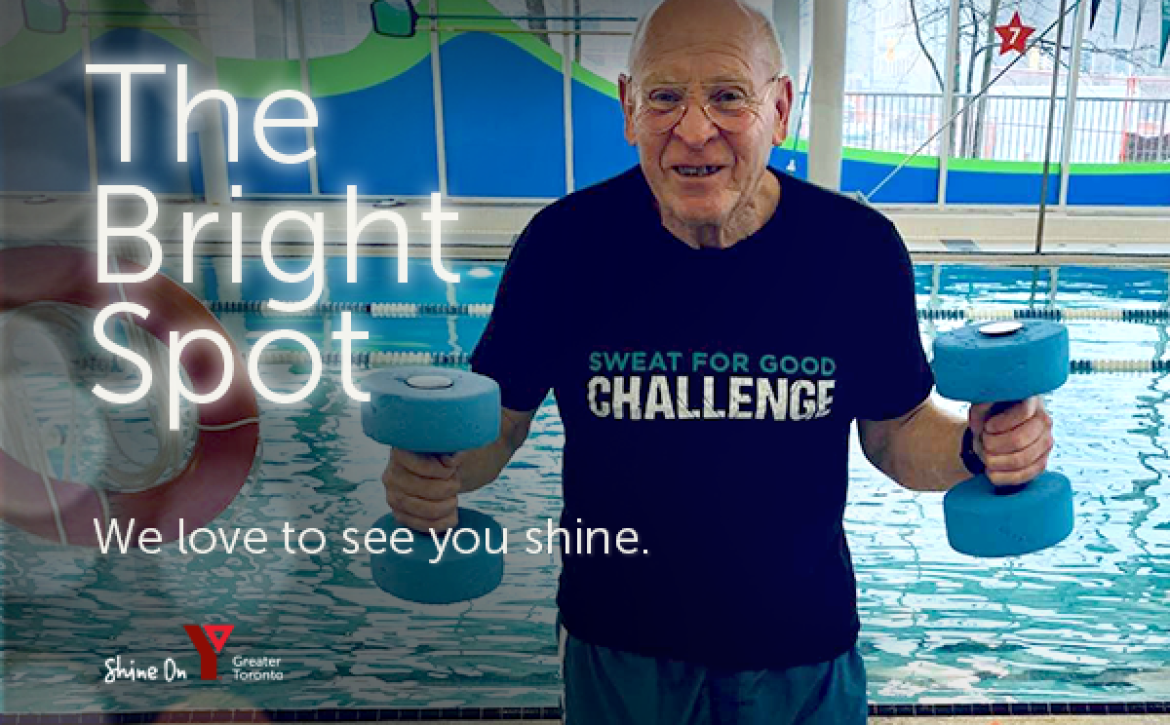
Today, Doug’s striving to help others access the same tools and supports that helped him along the road to recovery. Doug volunteered as an instructor for his favourite class, AquaFit, and he even joined the Sweat For Good Challenge, our biggest fundraising event of the year. The money Doug raised helps others in the community access the same YMCA programs that supported him in his journey of healing. Funds go towards financially assisted memberships for people who otherwise couldn’t afford to join the Y. For someone going through life-altering changes like Doug was, getting access to these supports can mean a world of difference.

From barely being able to walk and needing two hands to pour his coffee, to leading group fitness classes every week and participating in a fitness fundraiser, Doug has come a long way in a short amount of time.

We continue to be inspired by Doug, and we hope you are, too. Join more activities and connect with others through The Bright Spot. We’re thrilled to bring you fitness, mindfulness, and community, right to your home.

READ MORE
08 Apr
Fitness & Active LivingHobbies & InterestsBy admin0 Comments

The health benefits of pets

What would we do without our pets? We love our dogs, cats, guinea pigs, iguanas, rabbits, and snakes because they make us feel good. But why does being with our pets make us feel so much better?

It turns out there are a number of health benefits to owning a pet. They can help reduce our levels of stress, anxiety and depression because the feelings they stir in us increase our levels of feel-good hormones serotonin and dopamine, making us feel more calm and relaxed.

Understanding the pet effect

April 11 is National Pet Day. This day was first recognized in 2006 and was created by animal welfare advocate and family lifestyle expert Colleen Paige. Colleen believes that animals in shelters should be adopted as pets and given an opportunity to be loved and cared for. Pets make us humans happy and healthy.

Dogs and cats in particular are exceptional at cuddling and many won’t turn down a hug, stroke or scratch behind the ear. We are a perfect match with our furry family members because we both thrive from personal touch and interaction and are happiest in the company of our “pack”. In fact, there are so many health benefits to the connection humans and animals have, that it’s often referred to as the “pet effect”.

Pets can keep you physically and socially active

Studies suggest that those of us who are over 65 and have a pet make fewer visits to the doctor. We are more physically active when we take our furry friends for a walk every day and play with them at the park, for example. They also provide us with welcome companionship and help improve our feelings of loneliness by giving us a purpose and routine — they even help us to meet new people!

Owning and caring for a pet, like a dog or a cat, is a commitment and may not be possible for everyone based on their health or financial situation, or perhaps because of where they live. But it’s worth a visit to your nearest shelter, perhaps to fall in love with your new pet or just to get some of that “pet effect”.

Read more about the mood-boosting power of dogs, and about the “pet effect”.

READ MORE
05 Oct
Fitness & Active LivingBy admin0 Comments

How to shine and stay active in your golden years

Physical activity at any age is important, but as you get older, it becomes an essential part of a long, rewarding life. Here are a few reasons why incorporating diet and exercise into your day-to-day plans can add years to your lifespan.

By the numbers

Canada’s older adult population is growing. It’s projected that by 2061, we’ll have over 12 million people aged 65+. 

Yet even though this group bracket is increasing, activity levels are not. In fact, according to a Statistics Canada report, only 20 per cent of seniors get the recommended amount of physical activity each week. 

If you’re an older adult, you should aim for 150 minutes of moderate-intensity aerobic activity per week. That doesn’t mean running a marathon or competing in a weightlifting competition. Anything that gets your heart beating faster and makes your muscles work harder is a good starting place.

A whole body workout

According to the National Institute on Aging, exercise helps you in a variety of ways that go beyond just a healthy body. Staying active can reduce your risk of dementia by increasing oxygen flow to your brain, lower your risk of osteoporosis by improving bone density and make you a happier person by releasing endorphins into your body. 

Other benefits include: 

  • Lowering stress and anxiety levels
  • Improving your sleep
  • Reducing the risk of serious disease
  • Increasing cognitive functions 

While there are countless benefits to increasing your activity levels, you should also watch for warning signs that you may be overdoing it. Dramatic weight fluctuations, ongoing muscle stiffness and prolonged weakness or dizziness are things you shouldn’t ignore. If you happen to notice changes in your body that are out of the norm, it’s best to consult a medical professional for advice.

A weight off your shoulders

According to Harvard Medical School, adults put on three to four pounds per year after they turn 40. But due to the aging process, they lose one to two per cent of muscle at the same time. That means the extra weight you gain ends up being mostly fat. This can contribute to higher cholesterol levels and increases your chance of developing type 2 diabetes. By focusing on positive eating habits and incorporating strength training into your health routine, you can help to minimize those risks.

If you’re looking to take your workout to the next level, you could follow Ernestine Shepherd’s path. She started her fitness journey at 56 without any previous gym experience. Now, she holds a title in the Guinness World Records at 80 as the oldest competitive female bodybuilder in the world!

You may not want to go to the same lengths, but two days a week of light aerobic activity can help control your weight and keep your muscles strong.

Never too late to start & stay active

Even if regular physical activity hasn’t been part of your daily routine, it’s never too late to change old habits and adopt new ones. The lifestyle choices you make, whenever you start, will have positive effects on your body. Things like eating a balanced diet, reducing alcohol consumption or getting a good night’s sleep contribute to healthy ageing. 

In a study from Sweden, a group of 50-year-old males were tracked over the course of 35 years. Subjects were asked to submit detailed information about their health habits every year. Researchers found that those who increased their activity levels, even into their 70s, extended their lifespans and their quality of life.

Taking a step in the right direction

The YMCA of Greater Toronto has been offering health and wellness classes for decades, but with the shift to digital programs with the COVID-19 pandemic, now you can stay active from the comfort of your home. So, whether you’re looking to line dance, lift weights or learn yoga, there’s an activity waiting for you to explore at The Bright Spot. Visit our activities page to learn more.

READ MORE
24 Mar
Exercising is the key of his vitality!
Fitness & Active LivingBy admin0 Comments

Tips for starting and sticking to a new spring fitness routine

In the northern hemisphere, spring’s arrival brings more active, outdoor time! But staying active and connected can be challenging during a global pandemic. Feelings of isolation and loneliness are on the rise. While these factors permeate every area of your life, they are also a particularly potent influence on your health, your relationship to your body and perhaps a changing attitude toward fitness.

What’s missing?

If you were a gym-goer, you might be missing the camaraderie that comes with seeing your fellow community members in the conditioning room, or maybe the friendships you built in group fitness classes kept you coming back for more. Perhaps it was the motivational instructor cheering you on as you push through that last set of burpees that helped you exceed your expectations. It may certainly feel like you are now left to your own devices. And for social creatures like us, all this can be demotivating.

The Bright Spot can help you stay active and motivated

To start, get up and get moving today! You’ll get immediate gratification in the form of endorphins. These feel-good chemicals will prime your mind for another day of working out. The buzz you get after a good workout is a miraculous mood-booster and a wonderful way to get back on the fitness wagon. Think of it as a reward. You really don’t need to overthink it. In fact, start as soon as you’re done reading this blog by visiting the activities page on the Bright Spot.

Make a longterm plan

And of course, it’s no secret that regular and continuous exercise has a positive effect on your overall mental health, so make it a priority and stick with it in the long run. Studies say that regular exercise reduces symptoms of depression and anxiety, and after the year we have all had, nurturing our mental health is certainly a welcome salve!

One way to ensure you reap all these benefits is to make a fitness plan. Get your calendar and schedule your workouts for the next six weeks. The standard recommendation for most adults is 150 minutes of moderate to high-intensity activity per week. Consider splitting the week up into five 30-minute workout sessions, or two-hour-long classes and a 30-minute outdoor walk or jog.

Mindful reflection gives your new routine even more staying power

After your six weeks are up, take some time to reflect by journaling about your experience.

Grab a pen and paper and start writing down answers to these questions:

1. How are you feeling compared to when you started?

2. Are you seeing any changes in your mood?

3. Do you see any changes in your body?

4. Do you feel stronger in your day-to-day activities?

5. If so, how and when does your newfound strength show up in your regular life?

Many people report feeling more emotional resilience and physical endurance. Your hard work starts to permeate your life and taking a moment to mindfully reflect on all of this is yet another motivator that will keep you coming back for more.

Keep evolving

After the first six weeks are up, it’s the perfect time to assess if your routine needs a change. Maybe you can increase your fitness frequency or try new styles of exercise to keep your mind and body evolving. In other words, take it to the next level!

Other health conditions can improve with exercise, too

Some types of exercises can even help with conditions like high blood pressure, diabetes and even chronic pain. By finding new ways to move and stay motivated, you can take charge of your overall health. Focusing on something you can control – like your fitness sessions – can also bring about feelings of empowerment which can feel grounding during times of uncertainty.

We are looking ahead to a brighter future when we can be together in person again. Until then, we know that a variety of online classes, inspiring instructors and connections to others will help you meet and exceed your fitness goals, plus we promise you’ll have a lot of fun! And that’s the best way to ensure long-term commitment and success.

READ MORE
28 Jan
Mature woman doing yoga exercise at home
Fitness & Active LivingBy admin0 Comments

How much physical activity do you need?

At the YMCA of Greater Toronto, we respect and admire the expert advice provided by our partner health charities. That’s why we’re excited to bring you even more great reading material from the team at the Heart and Stroke Foundation of Canada (Heart and Stroke).

To maintain heart health, a little physical activity goes a long way. Regular physical activity is a great way to keep your heart healthy and lead a healthy lifestyle. But if you’re not active now, don’t worry. You don’t have to suddenly embark on an Olympic-training program. The Bright Spot is the perfect place to start your journey, and the options are almost endless!

Heart and Stroke’s recommendations

Heart and Stroke recommends adults should accumulate at least 150 minutes of moderate- to vigorous-intensity aerobic physical activity per week, in bouts of 10 minutes or more. The activity doesn’t have to be non-stop, such as an aerobics class. You can do 10 minutes or more at a time throughout the day to reach your daily total. For example, take a brisk 10-minute walk mid-day, play for 10 minutes with your grandkids (if you are able to see them safely during COVID-19 restrictions), and then spend some time participating in one of our many Bright Spot activities like Yoga, BodyFit or Tai Chi!

If you’re short on time, remember that any physical activity is better than none. However, the more active you are, the greater the health benefits. The bonus: physical activity will give you more energy and help you cope better with stress and low mood.

Older adults should add muscle and bone-strengthening activities using major muscle groups at least two days per week to enhance balance and prevent falls. The Bright Spot is now offering a brand new class that will help you learn how to do just that. Try our Weights For Bone Health class every Friday at 9:00 am.

Just as a variety of foods is important for healthy eating, a variety of activities is important for healthy living. Choose physical activities that require endurance, strength and flexibility.

Endurance activities are continuous activities such as walking, cycling and tennis. They’re especially beneficial for your heart, lungs and circulatory system.

Strength activities, such as carrying groceries, heavy yard work or snow shovelling and weight training can help to strengthen muscles and bones and improve posture. Aim for at least two times a week.

Flexibility activities like yoga, tai chi, and even housework will keep your muscles relaxed and your joints mobile. Increased flexibility later in life will allow you to continue to tie your shoes, reach the top shelf in your kitchen and clip your toenails. Try our Functional Movement class for specialized instruction.

Balance activities you can do at home include standing on one foot or standing on your toes while holding onto the back of a chair. As you progress, steady yourself with one finger, then try it with no hands. When you are really steady, try the exercise with your eyes closed. Any exercise that strengthens your lower body is also a great addition.

Be sure to vary your activity from light, moderate and vigorous effort. And remember that it’s never too late to strengthen your body! Studies have found that weight training can reverse muscle weakness even among people in their 90s.

NOTE: Before starting a physical activity program, speak to your healthcare provider first to discuss what is right for you.

READ MORE
05 Nov
Dreamy aged female enjoying tea remembering pleasant memories
Fitness & Active LivingBy Zoja Popovic0 Comments

Healthy weight and waist

Here at The YMCA of Greater Toronto, we respect and admire the expert advice provided by our partners at The Heart and Stroke Foundation of Canada. That’s why we’re excited to bring you even more great reading material written by the team at this other health-focused charity! In this next piece, we find out how to do a personal assessment of our weight and waistline. It turns out it’s not just about the number on the scale.

Did you know that 60% of Canadian adults are overweight or obese? Obese Canadians are four times more likely to have diabetes, more than three times as likely to have high blood pressure and more than two times more likely to have heart disease than those with a healthy weight.

For those Canadians, a modest weight reduction of as little as 5% of body weight can reduce high blood pressure and total blood cholesterol. However, simply knowing your weight is not enough to know your health risk. Did you know that you can have a healthy weight, but still be at increased risk? How our bodies store excess weight (specifically fat) can negatively impact our health.

Today, there are two methods of self-assessment that can give you a clearer picture of how your weight may be affecting your health – measuring your waistline and calculating your Body Mass Index (BMI).

Healthy waists

Measuring waist circumference can help to assess obesity-related health risk. Even at a healthy weight, excess fat carried around the waist can increase your risk of high blood pressure, high [blood] cholesterol, heart disease and type-2 diabetes. The best way to find out if your waistline is increasing your risk of heart disease is to measure it.

Your natural body shape is an important consideration

Where you carry your weight is just as important as how much weight you carry when it comes to your health. If you’re at risk for overweight-related diseases such as high blood pressure, high blood cholesterol, type-2 diabetes, heart disease and stroke it’s important to follow these steps to assess your waistline size with a measuring tape.

1. Clear your abdominal area of any clothing, belts or accessories. Stand upright facing a mirror with your feet shoulder-width apart and your stomach relaxed. Wrap the measuring tape around your waist.

2. Use the borders of your hands and index fingers – not your fingertips – to find the uppermost edge of your hipbones by pressing upwards and inwards along your hip bones.

Tip: Many people mistake an easily felt part of the hipbone located toward the front of their body as the top of their hips. This part of the bone is in fact not the top of the hip bones, but by following this spot upward and back toward the sides of your body, you should be able to locate the true top of your hipbones.

3. Using the mirror, align the bottom edge of the measuring tape with the top of the hip bones on both sides of your body.

Tip: Once located, it may help to mark the top of your hipbones with a pen or felt-tip marker in order to aid you in correctly placing the tape.

4. Make sure the tape is parallel to the floor and is not twisted.

5.Relax and take two normal breaths. After the second breath out, tighten the tape around your waist. The tape should fit comfortably snug around the waist without depressing the skin.

Tip: Remember to keep your stomach relaxed at this point.

6. Still breathing normally, take the reading on the tape.

Are you at risk?

Male*: more than 94 cm (37 inches) is increased risk; more than 102 cm (40 inches) is substantially increased risk.

Female*: more than 80 cm (31.5 inches) is increased risk; more than 88 cm (35 inches) is substantially increased risk.

*Other risk factors such as ethnicity, individual risk factors, pregnancy, medical history and family history can affect your risk, regardless of your waist circumference.

Having a waistline that is below the cut-off does not mean you are completely free of risk. Your individual risk can be influenced by your health, medical history and family history, so the universal cut-points can be misleading. If you have other risk factors, like diabetes, high blood pressure, or high cholesterol, you might need to lower your waist circumference to minimize your risk. Reducing your waist circumference by 4 cm can have massive benefits to your risk profile and reduce your chances of developing diabetes, heart disease and stroke.

Healthy Weight

Measuring your waistline alone won’t give you all the information you need about your weight. Knowing your waist circumference and your Body Mass Index (BMI) will help you have a good conversation with your healthcare provider about how your body is changing as you age.

The BMI is a ratio of your height and weight. It applies to people between the ages of 18 through 65, except if they are pregnant, breastfeeding or very muscular.

  • Calculate your BMI yourself. Divide your weight in kilograms by the square of your height in metres.
  • Or, using pounds and inches, multiply your weight by 703, divide by your height, then divide by your height again.

If your BMI is

– between 18.5 and 24.9, you’re at lowest risk of developing health problems.
– between 25 and 29.9, you’re considered overweight.
– 30 or more, you’re considered obese.

Tracking your Healthy Waist and Healthy Weight

A single measurement of waist circumference or BMI doesn’t tell us everything we need to know about our obesity-related health issues. Tracking your waist circumference with body weight (BMI) over time is an excellent way for you and your healthcare provider to understand how your body is changing as you age and to monitor your risk of heart disease and stroke.

Achieving a healthy weight isn’t always as simple as eating healthy and being active, but it is a great beginning. Speak to your doctor about different lifestyle options to help you maintain or achieve a healthy waistline and weight that is right for you.

Managing your weight doesn’t have to mean altering your life dramatically. Take small steps, like exercising regularly and eating healthy food.

READ MORE
04 Sep
Fitness & Active LivingBy Zoja Popovic0 Comments

3 ways to make fitness part of your “new normal” this fall

Some people only set new fitness goals when the New Year rolls around, but we think fall brings the same sort of fresh start feelings. After all, many people intrinsically feel the pull to organize and plan in September, perhaps harkening back to all of our back-to-school days. There’s just something about these shorter and colder days that make for a perfect time to start a new routine.

Here are three tips for easing into a healthier, happier lifestyle this fall:

1. Streamline your workouts

After those long, lazy summer days, it can feel tough to get back into a structured routine — especially this year, when everything feels so uncertain. So start small: go for a walk after lunch; try yoga at home with the help of our online activities; or take a tai chi class in your backyard. As long as you have a Wi-Fi connection, you’ve got our expert fitness instructors at your fingertips. Setting aside as little as 15 minutes to do something active every day is a great way to start building healthy habits, and the energy boosts you’ll enjoy from your mini-workouts will probably motivate you to start extending them into longer, more intense ones.

2. Make an exercise schedule

You’re far more likely to skip your workout if it’s inconveniently timed. Be honest with yourself: choose the time of day you typically feel most energized and motivated, and commit to doing your workouts at those times. Then, browse our Sweat For Good app to see which in-person activity is available at your preferred time. You can plan and schedule your fav workouts through the in-app calendar, too. If you’re looking for online classes, the Bright Spot activities page has a handy calendar view as well.

3. Stay away from the scale

While goal-setting is a great way to get started, you can actually stunt your progress if you focus exclusively on tracking your weight. If you’re getting all your motivation from an external source like a number on a scale, things like miniscule fluctuations in your weight can totally destroy your commitment to your new healthy habits, making you feel like all your hard work isn’t paying off. Sticking to a workout regime for the long run requires getting your inspiration elsewhere — like getting the energy you need to play with your grandkids, becoming a better role model, or building your sense of confidence and self-esteem.

Take advantage of those feelings of a fresh start we all get in the fall, and make this September count by tackling a fitness goal you’ve always wanted to pursue.

READ MORE
  • 1
  • 2
Categories
  • Fitness & Active Living16
  • Food & Nutrition7
  • Health4
  • Healthy Living17
  • Hobbies & Interests12
  • Lifestyle3
  • Mental Health25
  • Spotlight Stories13
Recent Posts
  • 5 ways to explore the Greater Toronto Area on a budget
    5 ways to explore the Greater Toronto Area on a budget
    April 6, 2023
  • Eating well and staying healthy on a budget
    Eating well and staying healthy on a budget
    December 7, 2022
  • 5 budget-friendly ways to stay fit and active
    5 budget-friendly ways to stay fit and active
    October 5, 2022
logotype

Follow the Y

Twitter Facebook Youtube Instagram Linkedin
Privacy Policy Terms & Condition
Donate Now

YMCA of Greater Toronto 2023. All rights reserved

Charitable registration number 11930 7080 RR0001