
Donate
  • Home
  • Bright Ideas Blog
logotype
  • Home
  • Bright Ideas Blog
logotype
  • Home
  • Bright Ideas Blog
Author: Saad Javed
Home Articles Posted by Saad Javed
14 May
Healthy LivingHobbies & InterestsBy Saad Javed0 Comments

Staying home doesn’t mean stopping your social life! Try these digital tips to keep connected

According to the World Economic Forum, 2.6 billion people, or one third of all people on planet earth are currently living in some form of a lockdown. So, if you’re craving a little social connection, you’re not alone!

The good news is, in times of crisis, humans are great innovators: we get creative and find new ways to get the things we need. According to the CBC, dance parties, book clubs, and group dinners have been moved into the digital world in great numbers. Even choirs that normally harmonize in a shared physical space have taken to brushing up on their musical talents virtually.

Transitioning to an online social life can come quite easily to the younger generation, but it might not be as second-nature to older adults. Aside from learning a new set of tech tools, it can also take time and effort getting used to this new way of “meeting.” But the effort is well worth it! People are wired for social connection and our mind and body benefit greatly from it. Social connection can decrease anxiety and depression, help regulate our emotions, boost our self-esteem and empathy, and even improve our immune system.

Here at the YMCA of Greater Toronto, we want to help you find community and a sense of belonging, even while we all keep our physical distance. Our centres might be temporarily closed, but we’ve created this website as a “place” where you can feel right at home.

If you haven’t already, we’d love to encourage you to try:

  • A variety of fitness classes specifically designed with you in mind
  • Online “meet ups” where you can get together with others, join in on some lively conversation, and make some new friends
  • Resources from other organizations we thought you might find helpful

Are you interested in trying it out, but not sure where to begin?

Start with our Activities page. All you need to join is a computer, an internet connection, and the application called Zoom. If you don’t have Zoom yet, we’ve created an easy-to-follow video guide to help you get started. We’ve also got a friendly team of staff available to give you a call and take you on a guided tour of the site if you want a little extra support.

As you begin to explore your digital socializing options, try to remember that everyone is at a different comfort level when it comes to technology. Wherever you might be in your tech journey, start with what you know and build on it. The important thing is that you’re staying in touch with other people and sharing your unique human experience. We are all in this together and we’ll all feel much better if we stay tethered to one another!

We look forward to seeing you for our next social event.
READ MORE
14 May
Fitness & Active LivingBy Saad Javed2 Comments

2 at-home exercises to help build your balance from a YMCA health and fitness expert

We rely on good balance a lot in our day-to-day lives. It helps us walk with ease, climb stairs without stumbling, sit down and stand up, and even dance to our favourite tunes. It isn’t until we start to lose this faculty that we realize how much we need it. So we asked Sam Casmey, Manager of Adult Health & Fitness Programs here at the YMCA of Greater Toronto, to share her advice for building balance while you’re at home right now.

Why is your balance changing?

Our bodies change as we age and over time, you might have seen your balance decline. These issues can arise for older adults for a variety of reasons, such as decreases in the quality of your vision, inner ear problems, or changes to your sense of touch and proprioception (the ability to sense where your body is in space).

Understandingly, these physical changes might change your approach to exercise — but they shouldn’t spell the end of a fun, active lifestyle! In fact, studies suggest that regular, appropriate exercise can slow the physiological decline of balance, and in some cases, make you feel even more stable than you were before.

How can you work on improving it?

The trick to maintaining or improving your balance and mobility is to take it one step at a time. When you’re doing any given exercise or activity, try to see if you can find stability. Once you feel comfortable, it’s time to challenge yourself! While you’re doing that exercise or activity, try removing a stabilizing factor to see how your mind and body respond. For example, if you were exercising while holding onto a chair or countertop for stability, try taking your hand away for a second. See how it feels to do the same movement without holding on.

Try these exercises at home

1. Standing on one leg

Set yourself up near a wall, so you can rest your hand on it for support if you need to. Start on both feet, then start to lift one leg off the floor. Notice how your balance is impacted here. Do you feel comfortable? Maybe you can move that lifted leg in space to make this exercise even more challenging! How does that feel?

Repeat the same exercise on the other side, lifting the opposite leg off the floor. Once you’ve mastered that, you can start taking your hands away from the wall.

2. Standing on a firm pillow

Another way to challenge yourself is to stand on an unstable surface. Do the exact same exercise I explained above, but try standing on a firm pillow. Notice how it feels to stand on an uneven, moving surface. If it’s easy for you, try taking one hand away from the wall. Go slowly and focus your attention on staying balanced on your prop. Continue challenging yourself by removing the other hand.

When you’re doing either of these exercises, don’t forget to keep breathing evenly and steadily. Most importantly, have fun with it!

Work on your balance with one of our fitness instructors

We’re offering free low-impact exercise classes you can join from the comfort of your home. Join us on YouTube for your choice of live or pre-recorded fitness classes like Soothing Yoga, Bodyfit Chair, Bodyfit Gentle, Chair Yoga, and Arriba.

Sam Casmey has an honours BSc in kinesiology from the University of Waterloo and is a YMCA Canada Trainer Educator. She’s currently the YMCA of Greater Toronto’s Manager of Health & Fitness Adult Programs. In the 20 years she’s been working at the Y, Sam’s taught thousands of fitness classes and trained hundreds of volunteers to teach classes including Arriba, MuscleFit, Bootcamp, and many more. She’s currently spending her time on Sudoku, cryptic crosswords, and books on habits and behaviour change.

READ MORE
14 May
Fitness & Active LivingBy Saad Javed0 Comments

Safely enhance your heart health with these cardio tips from an expert

Regular exercise that gets your blood pumping is important for people of all ages, but older adults in particular have a lot to gain. Cardio can strengthen your heart and lungs, boost your energy, and even reduce symptoms of anxiety and depression. To help you tap into these benefits, we asked Sam Casmey, Manager of Adult Health & Fitness Programs here at the YMCA of Greater Toronto, for some tips to safely get your heart rate up at home.

Moderate exercise for just 30 minutes a day makes a big difference for your health. And by “moderate exercise,” I don’t mean you need to take a wild bootcamp class! I mean moving your body in any way that feels good to you. You’ll get pretty much the same benefits whether you get your daily half-hour of movement in all at once, or break it up in a few short sessions. For instance, you could try three 10-minute bouts of exercise, spread over a whole day. So, there’s no need to push beyond your limits in one sitting!

Try these cardio activities at home

The important thing with both of these activities is just to move your body, get your heart pumping, and stay pain-free. If you do start feeling any pain, go back to the basics — whatever sort of movement you were doing that wasn’t painful.

1. Put on your favourite song, and start moving! Just like with the balance exercises I shared in another article, you can start simple and take it up a notch when you’re ready.

2. Start sitting down, with your arms extended in front of you, or out to the sides. Start moving them in small circles. Once that feels comfortable, challenge yourself by making your circles a little bigger. If that feels good, add your legs. You can stay sitting, or stand up and continue moving your arms and legs.

It doesn’t really matter what movements you’re doing, as long as you’re warming up your body and feeling good. Remember that every day is going to feel different. Your energy, balance, and range of motion will fluctuate. Don’t get discouraged — it’s totally normal! Instead, check in with yourself, get a feel for where your body’s at today, and do what feels right.

Get moving with one of our free online classes

Cardio is especially fun when you do it with other people and good music! This might seem like a bit of a challenge while we practice physical distancing, but don’t worry: we’ve got you covered. Our low-impact online classes will get your heart rate up, all from the comfort of your home. Join us on YouTube for your choice of live or pre-recorded fitness classes like Soothing Yoga, Bodyfit Chair, Bodyfit Gentle, Chair Yoga, and Arriba.

Sam Casmey has an honours BSc in kinesiology from the University of Waterloo and is a YMCA Canada Trainer Educator. She’s currently the YMCA of Greater Toronto’s Manager of Health & Fitness Adult Programs. In the 20 years she’s been working at the Y, Sam’s taught thousands of fitness classes and trained hundreds of volunteers to teach classes including Arriba, MuscleFit, Bootcamp, and many more. She’s currently spending her time on Sudoku, cryptic crosswords, and books on habits and behaviour change.

READ MORE
14 May
Mental HealthBy Saad Javed0 Comments

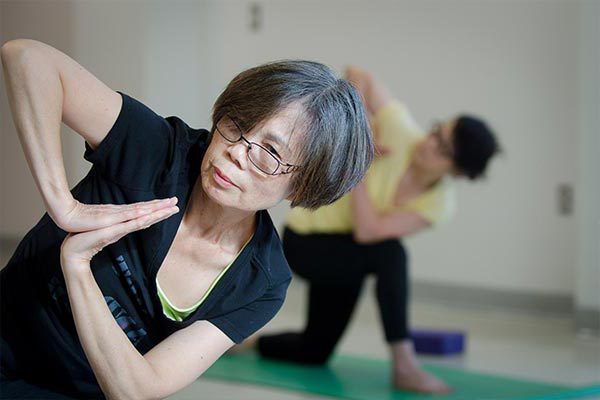
Boost your mood with at-home yoga and meditation

We’ve all heard that practicing yoga can help you find balance — and we’re not just talking about standing on one foot. Yoga can help you restore your energy levels, find peace, and build overall emotional resilience during this tough, stressful time. And moving through life with more ease and less stress means more energy for the things you love! So we asked Emilie Wong, a yoga and meditation teacher, to share how yoga can help support your mental health.

How to connect your mind and body through movement

Asana, or the physical practice of yoga, loosens up your joints, builds strength, and counteracts the effects of our increasingly sedentary lifestyles, which is even more important now that we are all staying home as much as possible. By practicing yoga regularly, you can mitigate pain or, in some cases, even get rid of it entirely. In part, that’s because yoga boosts endorphins — the brain’s feel-good hormones — which also act as pain killers.

While those are great benefits in and of themselves, yoga is also meant to prepare the body for meditation. Stiff joints or nagging back pain are distracting; loosening up and alleviating pain with regular yoga can help you clear your mind and live in the moment.

A simple breathing exercise you can try right now at home

Stand up tall with both feet planted on the floor. Start to notice how your weight sits in your feet. As you inhale, take your arms up overhead and reach for the sky. On your exhale, fold forward at the hips and allow your head, neck, shoulders, and arms to be weighed down to the ground. Stay in this forward fold for a few comfortable breaths, allowing your spine to lengthen. When you’re ready, press into your feet and roll up to standing as you inhale. Repeat the whole thing two to three times. As you go, gently note how this simple activity of connecting your breath to your movement can melt away stress and reduce stiffness in your spine and neck.

Truly be in the moment with our live yoga and meditation sessions

On The Bright Spot, our yoga instructors are leading live classes you can join for free. We hope to see you soon (virtually!) for some gentle stretching, breathing exercises, and guided meditation that will soothe both your mind and body.

READ MORE
14 May
Mental HealthBy Saad Javed0 Comments

A simple breathing exercise to help you stay calm and optimistic

What can you do to stay calm and optimistic when this crazy situation starts to take its toll? Well, yoga! Instructor Emilie is here with an easy exercise you can do right now, from the comfort and safety of your home, to help boost your emotional resilience and feel a little more positive.

Breathe your way to enhanced focus

If you’ve ever attended a yoga class (like the ones we’re offering on our Youtube channel these days!), you may have already felt the wonderful effects that pranayama, or guided breath work, can have on your nervous system. These ancient breathing techniques can positively impact your body almost instantly. But they also help you focus your busy mind, become more present, and feel grounded in the moment.

How to try it right now from home

Take a gentle breath in. As your lungs expand on the inhale, think of it as an opportunity to create more room within your body. When they deflate on the exhale, imagine letting go of any negative thoughts, tension, or residual energy. Repeat five times and then sit quietly with any sensations that arise. Allow your breath to return to normal.

If you’re about to do some self-guided yoga, or you want to enhance your virtual class, you can also set an intention for your practice by repeating a positive phrase towards yourself or someone close to you. Some examples of intentions I like are “I am radiant” and “sending out love.” Say one calmly in your head as you practice your breathing.

Remember, we are all in this together. If you’re feeling inspired, spread the word by sharing this article with a friend or family member who might also stand to benefit from a rush of feel-good endorphins during this stressful time.

READ MORE
14 May
Mental HealthBy Saad Javed0 Comments

Tips for processing challenging emotions and coping with adversity

We’re all doing our best to adapt to this new normal, but it’s tough. We asked yoga instructor Emilie to share some techniques for building emotional resilience, or the strength we need to handle challenging situations (like the one we’re in right now!) calmly. Here’s her simple step-by-step guide to meditation that will leave you feeling a little more zen.

Build emotional resilience through meditation

The science is in on this one: people who meditate regularly have higher emotional resilience. That’s because meditation can help you be more mindful: more present with what is, whether it’s good or bad. This ability to stay present in difficult times means you’re better equipped to process challenging emotions and cope with adversity — which is what emotional resilience is all about. There will always be difficult moments in life, just like the one we’re going through right now, but your reaction makes all the difference in how we experience those moments.

Try it at home

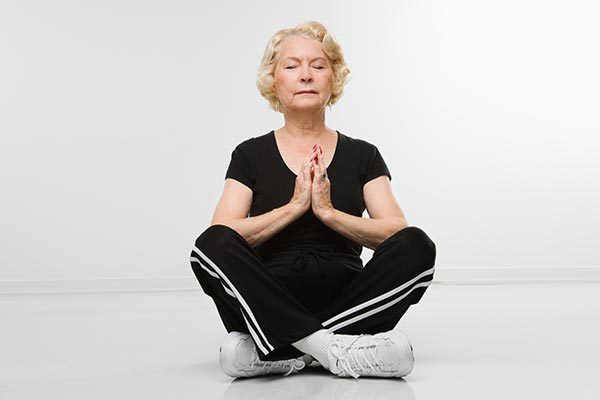
The best time to meditate is when you’ve warmed up your body and done some breath work. Set your alarm for five minutes so you’re not distracted wondering how long you’ve been meditating or how long you have left to go. Find a comfortable sitting position, keeping your spine long and rest your hands in your lap or on your knees. Start by gently closing your eyes, and tuck your chin in slightly towards your neck. Soften your jaw, throat, heart, belly, and base of your pelvis. Focus your attention on your breath: inhale through your nostrils, and exhale through your nostrils. Notice how your breath feels as it moves in and out of your body. Your thoughts will wander, and your mind will distract you from your breath. When you notice it happening, just return to your breath and notice sensations as they arise.

Many people feel great after just five minutes of meditating. But to really enjoy its effects on your mood, I recommend meditating every day for at least two weeks — and beyond.

To try yoga, breath work, and meditation by joining one of our virtual classes. We are offering a number of free low-impact yoga classes online that can help you unwind and find more inner peace. Browse our live and pre-recorded group fitness classes like Soothing Yoga, Bodyfit Chair, Bodyfit Gentle, Chair Yoga, and Arriba, and find the ones that make you feel good!

READ MORE
Categories
  • Fitness & Active Living16
  • Food & Nutrition7
  • Health4
  • Healthy Living17
  • Hobbies & Interests12
  • Lifestyle3
  • Mental Health25
  • Spotlight Stories13
Recent Posts
  • 5 ways to explore the Greater Toronto Area on a budget
    5 ways to explore the Greater Toronto Area on a budget
    April 6, 2023
  • Eating well and staying healthy on a budget
    Eating well and staying healthy on a budget
    December 7, 2022
  • 5 budget-friendly ways to stay fit and active
    5 budget-friendly ways to stay fit and active
    October 5, 2022
logotype

Follow the Y

Twitter Facebook Youtube Instagram Linkedin
Privacy Policy Terms & Condition
Donate Now

YMCA of Greater Toronto 2023. All rights reserved

Charitable registration number 11930 7080 RR0001